Foundation Repair Tampa
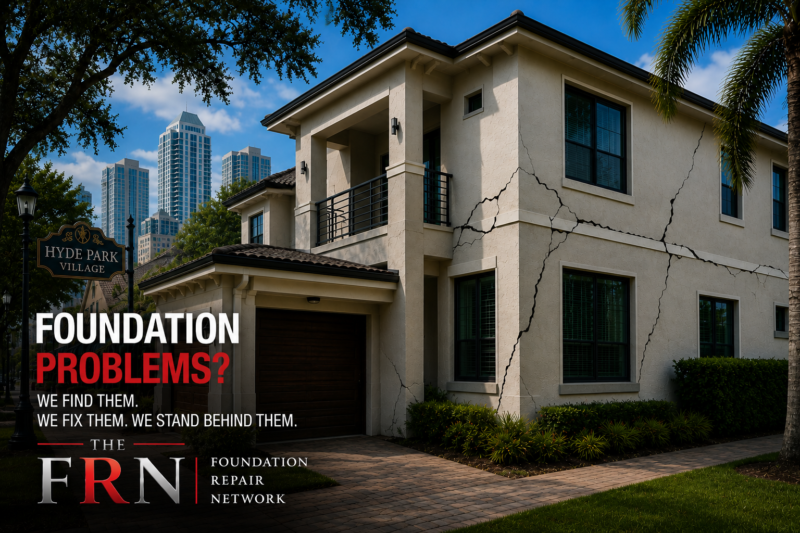
Tampa Bay’s location on Florida’s Gulf Coast creates some of the most challenging conditions in the state for foundation stability. Low-lying coastal areas, shallow groundwater, karst-prone geology, heavy seasonal rainfall, and aging structures all contribute to foundation settlement, cracking, and water intrusion.
The Foundation Repair Network provides Tampa homeowners, property managers, and building owners with independent information about foundation problems, repair methods, contractor proposals, and the questions that should be asked before hiring a foundation repair contractor.
Why foundation problems happen in Tampa.
Tampa’s foundation problems are usually not caused by one single issue. They are often the result of soil moisture changes, shallow groundwater, poor drainage, weak fill, stormwater loading, and structural movement occurring together over time.
- Heavy rainfall and summer storms can saturate soils and create rapid moisture changes beneath slabs and footings.
- High or variable groundwater can reduce soil bearing capacity and increase hydrostatic pressure near foundations.
- Karst limestone and sinkhole-prone geology can create voids, soil loss, and unpredictable settlement patterns.
- Sandy soils can erode, wash out, or lose support when drainage is poor.
- Expansive clay pockets can shrink and swell as moisture conditions change.
- Raised pads, fill, and regraded lots can settle if compaction or drainage was inadequate.
Not all foundation movement is the same.
A proper repair recommendation should identify the cause of movement before selecting a repair method. Settlement, soil loss, hydrostatic pressure, drainage failure, and structural cracking may look similar to a homeowner, but they require different solutions.
The most reliable repair plans are based on observed distress, site conditions, soil behavior, structural loading, and the expected long-term performance of the repair system.
What FRN Looks For
FRN focuses on whether a contractor’s recommendation makes technical sense. A repair proposal should explain what is moving, why it is moving, what system is being installed, and how that system addresses the underlying condition.
Foundation warning signs Tampa homeowners should not ignore.
Cracking
Cracks in drywall, ceilings, tile floors, stucco, block walls, garage slabs, or exterior foundations.
Movement
Sloping floors, sticking doors, misaligned windows, wall separation, or gaps around trim and framing.
Water Intrusion
Damp slab edges, garage moisture, pooling water, crawlspace humidity, or water intrusion after heavy rainfall.
Numerical Triggers Worth Documenting
- Cracks wider than approximately 1/8 inch, or cracks that continue widening over time.
- Floor slope greater than approximately 1 inch over 20 feet.
- Doors or windows that begin sticking after storms or wet weather.
- Water intrusion after 1–2 inches of rain near slab edges, garages, or foundation walls.
- Soil pulling away from the foundation, washouts near lanais, or step-cracks in masonry walls.
Foundation repair solutions used in Tampa.
The correct repair method depends on the structure, soil profile, groundwater conditions, the depth to competent bearing material, and the cause of movement. A credible repair plan should connect the proposed system to the actual site condition.
- Steel push piers transfer foundation loads to deeper bearing strata where appropriate.
- Helical piles may be used for new construction, additions, and selected retrofit applications.
- Slab stabilization can help address voids, support loss, or localized slab settlement.
- Drainage corrections reduce water intrusion, erosion, soil softening, and recurring movement.
- Retaining wall repair may be required where lateral soil pressure has affected walls or site grades.
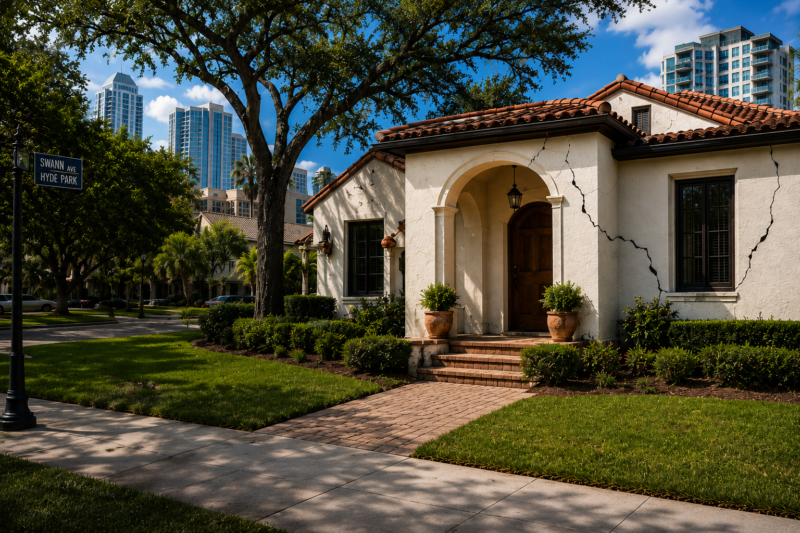
Local conditions can change the repair approach.
- Fill and regraded lots can experience differential settlement within the first several years.
- Flat terrain requires careful drainage planning, swales, outfalls, and stormwater control.
- Coastal and bay-adjacent properties may experience high groundwater and tidal influence.
- Pools, lanais, and additions can add loads at vulnerable slab edges and transition areas.
- Older block homes may show distress differently than newer slab-on-grade homes.
- Historic neighborhoods may include crawlspaces, additions, and mismatched foundation systems.
Questions to ask before signing a repair contract.
- What is the documented cause of movement?
- What measurements, observations, or testing support the recommendation?
- What system is being installed, and why is it appropriate for Tampa conditions?
- What is included, excluded, and warranted?
- Is the contractor licensed, insured, and experienced with similar work?
- Should an independent engineering review be completed before major work begins?
Related foundation repair information.
Explore confirmed Foundation Repair Network pages covering foundation repair, inspections, house leveling, and related structural topics throughout Florida.
Foundation Masters
The Foundation Repair Network recognizes Foundation Masters as Florida’s longest-running foundation repair company under continuous ownership. The company specializes in foundation repair, structural stabilization, deep foundations, and waterproofing services throughout Florida.
Questions about foundation problems in Tampa?
Contact the Foundation Repair Network for independent information about foundation movement, inspections, contractor proposals, repair methods, and warranties.