
Foundation Waterproofing Miami
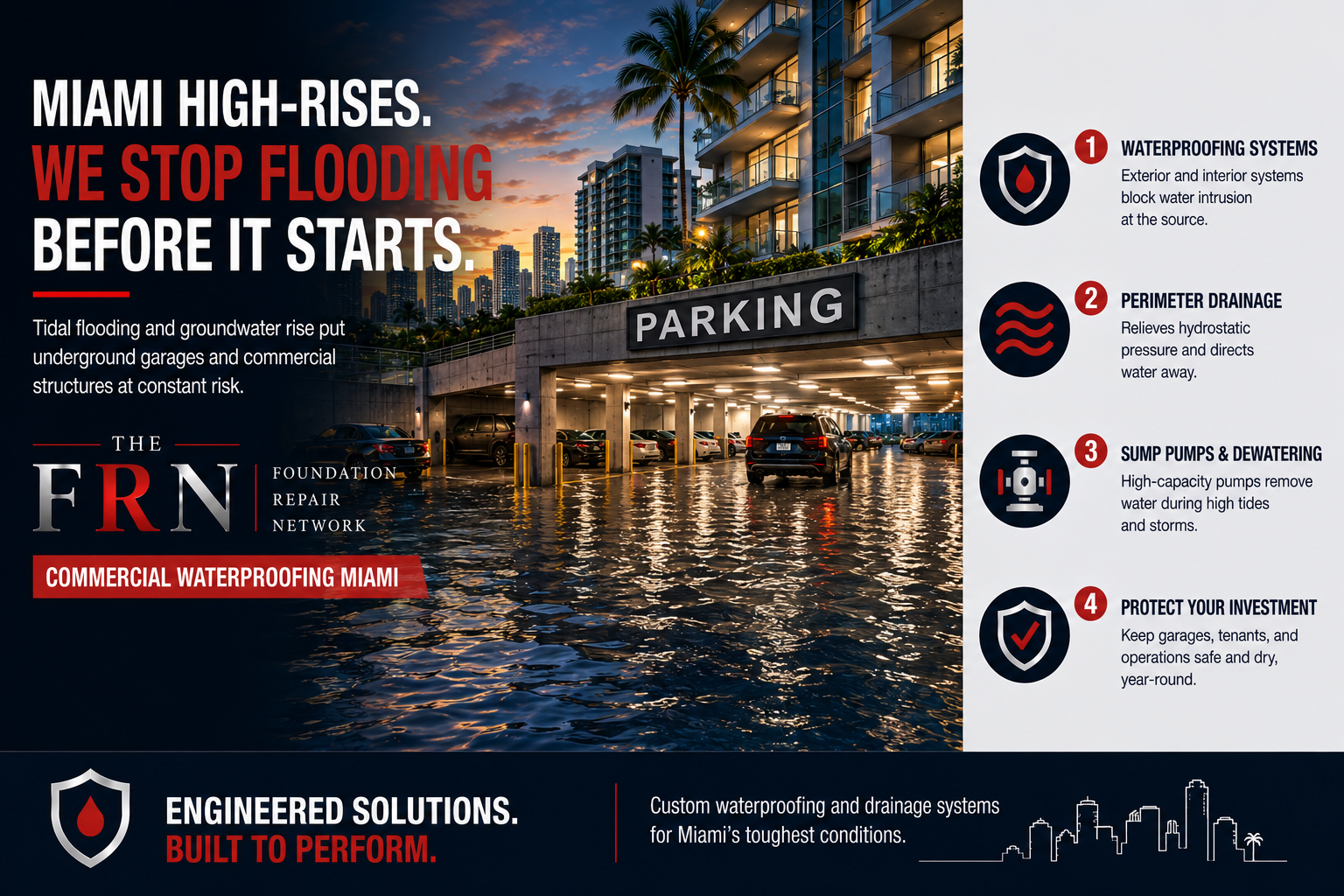
Foundation waterproofing in Miami is often tied to shallow groundwater, coastal flooding, heavy rainfall, slab-on-grade construction, underground garages, tidal influence, poor drainage, and low-elevation development. Miami properties may experience water intrusion through slab edges, masonry walls, cracks, joints, garages, elevator pits, parking structures, and below-grade areas.
The Foundation Repair Network provides educational information for Miami property owners dealing with foundation waterproofing, drainage problems, hydrostatic pressure, slab moisture, groundwater, sump pump systems, high tide flooding, and foundation-related water intrusion.
Because Miami is built in a low-lying coastal environment, waterproofing should be evaluated as part of the larger site condition. Water may come from surface runoff, roof drainage, irrigation, rising groundwater, tidal flooding, plumbing leaks, storm surge, stormwater backup, or water trapped beneath a concrete slab.
Miami Waterproofing Conditions
Miami waterproofing problems are often caused by a combination of shallow groundwater, porous limestone, sandy soils, heavy rainfall, storm surge exposure, tidal flooding, flat grades, and limited drainage fall. In many Miami neighborhoods, water may remain close to the foundation even when there is no obvious surface flooding.
Common Miami waterproofing concerns include:
- Water collecting along slab edges
- Moisture under flooring or vinyl plank systems
- Garage slab moisture and wall staining
- Water intrusion through block walls and joints
- Hydrostatic pressure near below-grade areas
- High seasonal groundwater after heavy rain
- High tide flooding and sunny-day flooding
- Underground parking garage water intrusion
- Cracks, pipe penetrations, and construction joints
Miami Geology, Groundwater, and Tidal Flooding
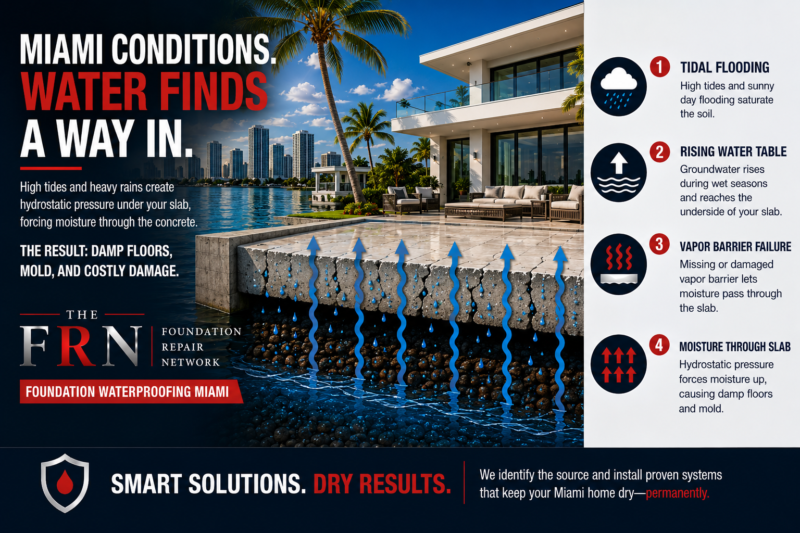
Miami sits within a coastal groundwater environment influenced by porous limestone, the Biscayne Aquifer, shallow groundwater, canals, Biscayne Bay, tidal areas, and low-elevation development. Unlike some inland areas where water can be redirected away from a structure more easily, Miami sites may be affected by groundwater that rises from below as well as stormwater that flows across the surface.
High tide flooding, sometimes called sunny-day flooding, can occur when tidal conditions push water into low-lying streets, drainage systems, and coastal areas even without a major storm. This condition can raise groundwater levels and increase pressure around foundations, slabs, underground garages, elevator pits, and lower-level building areas.
For waterproofing, the practical issue is that Miami structures are often built very close to water. Even without basements, moisture can collect below slabs, around footings, along block walls, under parking garages, and near low garage or addition areas.
Why Miami Homes and Buildings Need Drainage Before Coatings
Waterproofing paint, sealers, and surface coatings may slow minor dampness, but they do not correct poor drainage, tidal influence, or hydrostatic pressure. If water is pushing through a slab, block wall, crack, joint, or pipe penetration, the long-term solution usually starts with identifying the water source and relieving pressure where possible.
In Miami, that may include correcting grade, extending downspouts, improving stormwater drainage, installing interior perimeter drainage, adding sump systems, sealing penetrations, or designing groundwater relief where water cannot discharge by gravity.
Common Foundation Waterproofing Systems in Miami
The correct waterproofing system depends on the structure, water source, elevation, groundwater conditions, and discharge location. Common Miami waterproofing methods include:
- Exterior grading improvements
- Gutter and downspout drainage
- French drains and stormwater drainage systems
- Interior perimeter drainage systems
- Sump pump and dewatering systems
- Slab moisture and vapor control
- Below-grade wall waterproofing
- Crack, joint, and pipe penetration repair
- Foundation drainage and groundwater relief
- Structural repair where water intrusion is connected to movement or cracking
Slab Moisture and Floor Waterproofing in Miami
Many Miami homes and buildings are slab-on-grade structures. When moisture appears under flooring, around baseboards, along exterior walls, or beneath vinyl plank flooring, the problem may be related to groundwater, vapor pressure, roof runoff, poor grading, irrigation, tidal influence, stormwater, or water trapped below the slab.
Replacing flooring without correcting the water source can lead to repeated moisture damage. Slab moisture should be evaluated before new flooring is installed, especially in homes and buildings with prior water intrusion, low elevation, flood exposure, or drainage problems.
Underground Garages, Elevator Pits, and Below-Grade Areas
Traditional basements are uncommon in Miami, but waterproofing problems still occur in underground parking garages, elevator pits, stairwells, mechanical pits, lower-level commercial areas, sunken rooms, and below-grade building sections. These areas may collect water when groundwater rises, surrounding soil becomes saturated, or tidal and stormwater systems become overwhelmed.
Where gravity drainage is not available, water may need to be collected and discharged with sump pumps, interior drainage systems, or engineered dewatering systems.
Flood Zones, Sea Level Rise, and Miami Building Requirements
Miami waterproofing can also involve floodplain, stormwater, coastal construction, sea level rise, and building-code considerations. Properties located in flood zones, low-elevation neighborhoods, coastal areas, or storm surge zones may require special attention to drainage, elevation, flood openings, utilities, foundation design, waterproofing details, and local permitting requirements.
When waterproofing is connected to additions, substantial repairs, flood-damaged structures, below-grade areas, underground parking, coastal construction, or low-elevation properties, property owners should review applicable local code and permitting requirements before work begins.
How Miami Waterproofing Problems Should Be Evaluated
A Miami foundation waterproofing evaluation should begin outside the structure. The property should be inspected for roof drainage, gutter performance, downspout discharge, grading, stormwater flow, seawall conditions where applicable, irrigation systems, slab elevation, and areas where water collects during heavy rainfall or high tides. Understanding how water moves across and beneath the site is the first step toward selecting an effective waterproofing system.
The interior should then be evaluated for slab moisture, damp walls, flooring damage, staining, cracks, construction joints, pipe penetrations, underground garages, elevator pits, and other below-grade areas showing signs of water intrusion. The objective is to determine whether the moisture is caused by surface drainage, rising groundwater, tidal influence, hydrostatic pressure, plumbing leaks, vapor transmission through the slab, or structural conditions.
Waterproofing and Foundation Repair Are Not Always the Same
Waterproofing controls unwanted water, while foundation repair addresses structural movement and foundation stability. Although the two services often work together, they solve different problems. A property may require waterproofing without structural repairs, while another building may require foundation stabilization before a waterproofing system can perform as intended.
Throughout Miami, shallow groundwater, porous limestone, tidal flooding, storm surge, sea level influences, and heavy seasonal rainfall can create situations where both waterproofing and foundation repair are necessary. Identifying the actual source of the problem before selecting a repair method helps property owners avoid unnecessary work and achieve a more reliable long-term solution.
Questions to Ask Before Hiring a Waterproofing Contractor
Before selecting a waterproofing contractor, property owners should understand the source of the water intrusion, the proposed repair method, and how the system is expected to perform over time. Every Miami property is different, particularly where shallow groundwater, tidal influence, stormwater systems, and coastal conditions affect foundation performance.
Questions About the Problem
- What is the actual source of the water intrusion?
- Is the moisture caused by groundwater, drainage, plumbing, or tidal flooding?
- Will the proposed repair relieve hydrostatic pressure?
- Is structural movement contributing to the problem?
Questions About the Solution
- Where will collected water discharge?
- Is a sump pump or interior drainage system required?
- Will grading or stormwater improvements be needed?
- Are permits, engineering, or floodplain requirements involved?
Related Miami Foundation Resources
Waterproofing problems are often connected to settlement, foundation movement, drainage failure, slab cracking, hydrostatic pressure, or poor site conditions. These related FRN pages may help Miami property owners understand the larger foundation issue.
- Foundation Waterproofing Florida
- Foundation Repair Miami
- Foundation Inspection Florida
- Foundation Waterproofing Tampa
- Foundation Waterproofing Orlando
- Foundation Waterproofing Clearwater
- Contact FRN
Professional Waterproofing and Foundation Services in Miami
For professional waterproofing, drainage, sump systems, and water intrusion repairs, Miami property owners can visit Foundation Waterproofing 101.
For structural foundation repair, forensic foundation evaluations, settlement repair, deep foundation systems, and engineering-related foundation issues in Miami, property owners can visit Foundation Masters.
Foundation Waterproofing Miami Summary
Foundation waterproofing in Miami should start with identifying the source of water. The visible water inside the structure is usually only the symptom. The cause may be poor drainage, high groundwater, flat grades, roof runoff, flood exposure, storm surge risk, tidal flooding, slab vapor pressure, structural cracking, or water collecting against the foundation.
A proper Miami waterproofing plan should control water around the structure, relieve pressure where needed, protect slabs and below-grade areas, address underground garage and elevator pit concerns where present, and correct any foundation or structural conditions contributing to the problem.