
Top 5 Causes of Basement & Crawlspace Flooding (and How to Prevent Them)

Water is a home’s silent enemy. Left unchecked, it causes mold, wood rot, structural damage, and expensive repairs. In Florida, fluctuating water tables, high rainfall, and inconsistent construction practices make basements and crawlspaces especially vulnerable. This guide adds numbers and ratios so you can see the scale of the problem—and how to fix it.
1) Poor Grading & Surface Drainage (and Why It Doesn’t Always Help in Florida)
In most states, you can regrade soil to slope water away from the foundation. In Florida, that doesn’t solve the real problem: the water table.
- The water table typically fluctuates 2–6 feet below the slab, depending on rainfall, tide cycles, and aquifer activity.
- Raising soil against the walls only creates a new issue: you must then waterproof the wall itself, and thresholds at doors and garages prevent effective outward slopes.
- Once the water table reaches the bottom of the slab, it dissolves the vapor barrier. Concrete then acts like a sponge, pulling water upward through capillary action at 0.1–0.5 inches per day depending on soil porosity.
Result: finishes deteriorate within months, and slab moisture becomes chronic.
2) Interior Crawlspace Dirt Floors & Vapor Barrier Failures
Florida code requires at least a 6-mil polyethylene vapor barrier over crawlspace dirt floors. But this is often compromised when:
- The crawlspace floor is at or below exterior grade.
- Seasonal water tables rise into the crawlspace.
When this happens, the vapor barrier floods and fails. Moisture then accelerates mold, fungus, and decay.
Example: in a crawlspace during a 0.5 inch/hour rainfall event, without drainage, water can accumulate more than an inch per hour—flooding joists and flooring in a single storm.
3) Hydrostatic Pressure on Foundations
Hydrostatic pressure is the number one cause of foundation failures. The numbers explain why:
- For every 1 foot of groundwater height, lateral pressure increases by 62.4 pounds per square foot (psf).
- A 3-foot water rise under a slab applies about 187 psf of upward force—more than enough to crack slabs, shift framing, or pop finishes loose.
- In extreme cases, this upward force has lifted entire slabs.
4) High Water Table & Inadequate Floor Elevation
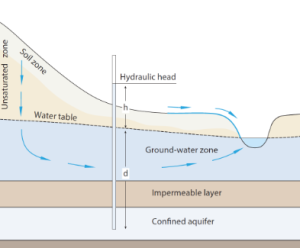
Best practice in Florida calls for finished floors—slab or crawlspace—to be at least 12 inches above finished grade. This helps protect against water intrusion during seasonal table rises.
But here’s the reality:
- Outside of flood zones, inspections often don’t enforce this standard.
- Builders frequently “scrape and build,” setting slabs and crawlspaces too close to grade.
- As a result, 40–60% of new homes fail to meet the 12-inch buffer.
During rainy seasons, water tables rise within inches of the slab, flooding crawlspaces and saturating slabs.
5) Cracks & Structural Failures — Weak Points That Let Water In
- Cracks just 0.1–0.2 millimeters wide are enough for water under pressure to seep inside.
- With only 1 foot of water head (≈ 62 psf), water will push through these cracks.
Surface patching with caulk won’t hold up under hydrostatic force. The correct approach is to stop the water source, then repair the crack with structural epoxy or reinforcement.
Why All This Matters in Florida, by the Numbers
- Florida averages 54 inches of rainfall per year, with 6–8 heavy rain days per month in wet season.
- Median home slab thickness is 4 inches—thin enough for hydrostatic uplift to crack.
- A water table rise of just 2 feet equals ~124 psf of pressure—about 1 psi spread over every square inch of slab.
Prevention Strategies (with Specs)
- Maintain crawlspace or slab floors at least 12 inches above exterior grade (if possible).
- Grade exterior soils with a minimum 2% slope, but combine with waterproofing since regrading alone won’t solve Florida water table issues.
- Use vapor barriers of at least 6 mil (0.006 inch) thickness, positioned above the water table by at least 2 inches.
- Install sump pumps rated at 1,500 gallons per hour at 10 feet head—adequate for most crawlspaces.
- Repair cracks larger than 0.1 mm with structural injection or reinforcement; never rely on surface caulk.
Expert Help
For waterproofing systems that account for water table elevations, hydrostatic forces, and Florida’s seasonal variability, visit Foundation Waterproofing 101. For cases involving structural cracking, slab movement, or forensic evaluation, consult Foundation Masters—Florida’s experts in permanent foundation solutions.